This is the least glamorous piece on this site and probably the most immediately useful. Most of the avoidable problems in tailoring come from an appointment where something obvious was missing.
The shoes you will actually wear
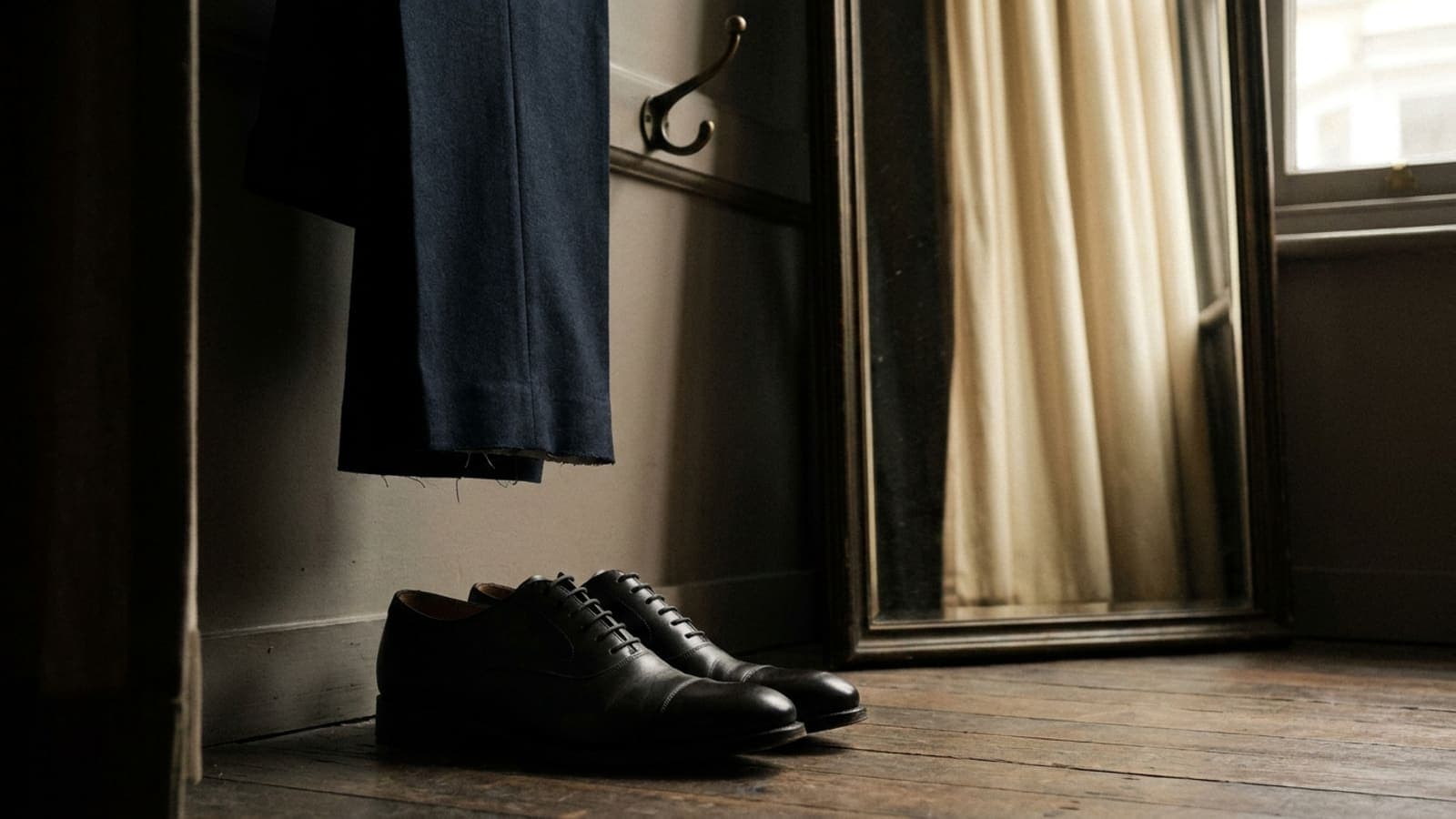
Not the ones you drove in. Trouser length is measured against a real heel height, and the difference between a dress shoe and a loafer is often half an inch — enough to change entirely where the trouser sits.
This matters more than any other single thing you can bring, because a hem is the one alteration that cannot be undone. There is no inlay at the bottom of a trouser leg. Cut short is short.
It also matters because break is a decision rather than a default. Full break, slight break, or none at all changes the line of the whole leg, and you should have a view. If a suit is going to be worn with two different shoes, say so — we will compromise deliberately rather than by accident.
Whatever changes the fit underneath
A waistcoat. A heavier shirt. A belt, if you wear one with those trousers — it changes where they sit on the waist, and a trouser fitted beltless and then worn with one sits differently.
For bridal this is not optional. A gown is designed to sit over particular foundation pieces, and fitting it without them produces measurements for a garment that will never be worn that way.
Everything you want looked at
Not one garment at a time across four visits. Bring the lot, including the things you are unsure about.
There is a practical reason beyond convenience: seeing several of your garments together tells me things that no single one does. If three jackets all pull in the same place, that is a fact about you rather than about the jackets, and it changes what I recommend.
A clear account of where it is going
The most useful thing you can arrive with is not an item at all. It is a straight answer to what the garment is for — which rooms, which season, how often, and whether you will be sitting in it for four hours or standing in it for one.
That answer changes cloth, construction and cut. A jacket for a courtroom, a jacket for a wedding on a lawn in July and a jacket for a flight are three different garments even in the same cloth.
And one thing not to bring
A performance. Ask anybody to stand naturally and they square their shoulders, which means the fitting is being done on a posture you will not hold for the rest of the day. Half of what I am doing in the first twenty minutes is talking until you forget to stand up straight.
So arrive as you are. Practically: we are appointment-preferred and all work carries a $75 transaction minimum, so it is worth ringing ahead rather than arriving hopeful — particularly if you are bringing several things.
If you are coming about something you already own
Wear it in, rather than carrying it in a bag. A garment on a hanger tells me very little; the same garment on you tells me almost everything in about ten seconds. Where it pulls, where it stands away, whether the shoulder is right — none of that is visible until it is on a body.
If several things need looking at, wear the most complicated one and bring the rest. And do not press or clean anything beforehand on my account. A garment in the state you actually keep it in is more informative than one prepared for inspection.
What we will ask you
Worth having thought about, because the answers change what we recommend:
- Where is it going, and how often — a courtroom, a wedding on a lawn in July, a flight. Three different garments, even in the same cloth
- Will you be sitting in it for four hours or standing in it for one? That changes cloth and construction more than most people expect
- Is there a date? Turnaround is typically one and a half to two weeks, and rush work carries an additional fee agreed in advance
- What do you own already that this has to work alongside? A garment that goes with nothing is a garment you will not wear