There is no legal protection on the word bespoke in the United States, and the result is predictable: it gets used for everything from a genuine hand-cut pattern to a website where you pick a lining colour. That is not always dishonest — plenty of people using it loosely believe it means personalised. But it makes the word useless as a signal, so it is worth knowing what the underlying difference actually is.
Where each one starts
Made-to-measure starts from an existing block — a base pattern the maker already has — and adjusts it to your measurements within the limits of what that block can do. Length, width, a degree of shaping. The block's fundamental architecture stays as it is.
Bespoke starts from paper and a person. A pattern is drafted for one body and no other. The word originated on Savile Row and means to be spoken for: a garment claimed by somebody before it exists.
That is the entire distinction, and everything else follows from it.
Why it matters, and when it does not
For a great many people, made-to-measure is genuinely enough — and I will say so rather than upsell. If you are close to a standard shape, well-proportioned, and stand more or less the way patterns assume people stand, a good made-to-measure garment from a maker who fits it properly is an excellent buy.
Where a block stops being able to help:
- A genuinely uneven shoulder — not the quarter-inch everybody has, but a real difference that has to be drafted for on each side separately
- A forward-set neck or a rounded upper back, which changes where the collar has to sit and how much length the back needs
- A chest that is not the shape the industry has agreed chests are — anyone athletic through the shoulders and narrow at the waist runs into this constantly
- A stance that is markedly upright or markedly forward, which is a balance problem and cannot be adjusted out of a block
Those are not adjustments. They are a different pattern.
The other real difference: fittings
Most made-to-measure involves one fitting, often after the garment is finished, at which point what can be changed is limited to what any alteration could change.
A commission here runs through three fittings after the first appointment — a scrap fitting proving the pattern in cheap cloth before yours is cut, a basted fitting with everything still moveable, and a forward fitting before delivery. The value is not the number. It is that two of the three happen while the garment can still be substantially altered.
How to tell what you are being sold
Four questions that settle it quickly, whoever you are talking to:
- Is a paper pattern being drafted for me, and is it kept afterwards?
- How many fittings, and does any of them happen before my cloth is cut?
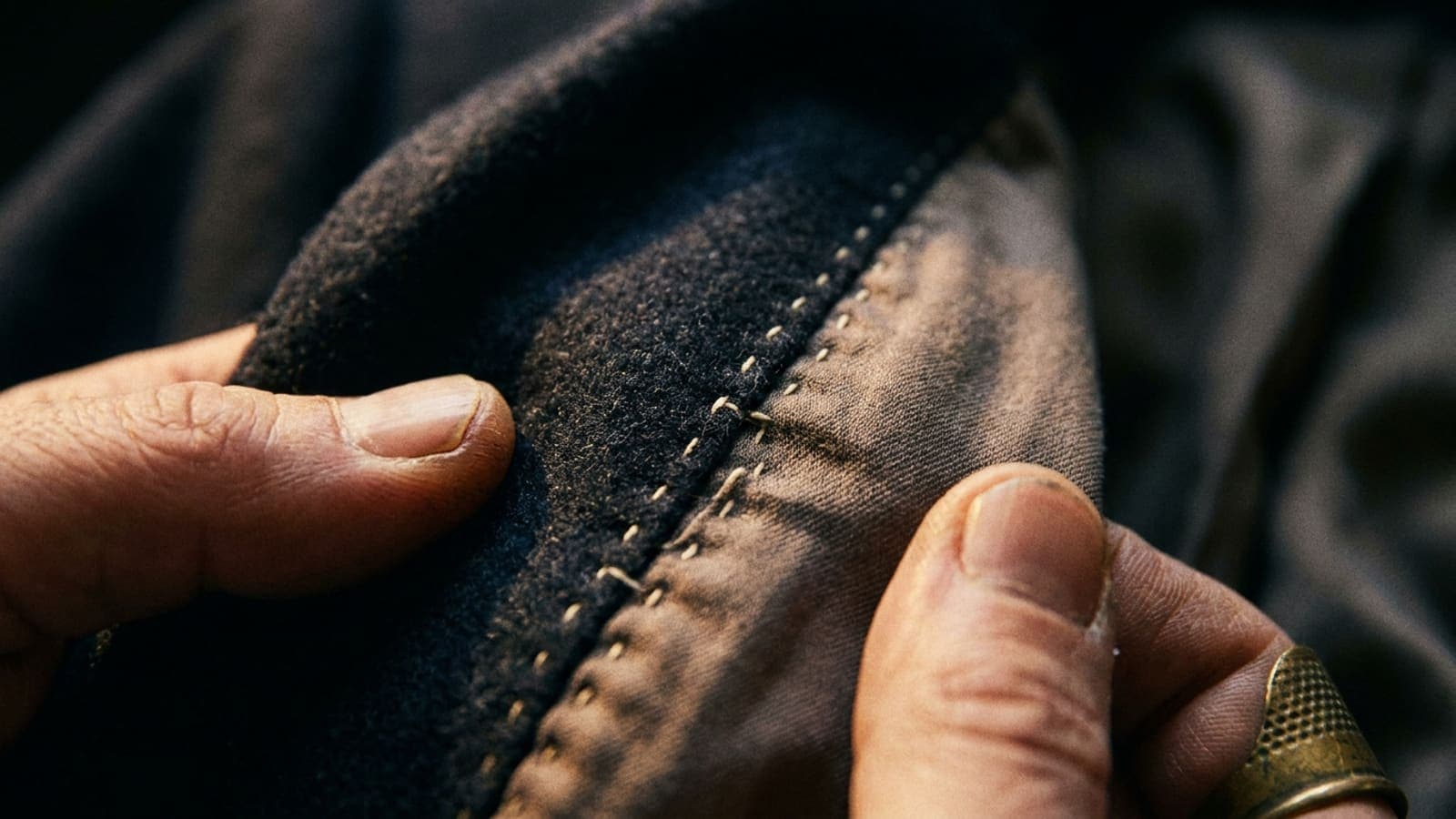
- Will I see the garment basted — half-made, in white thread?
- Is the chest canvassed, and is the canvas floating or fused?
Nobody honest will mind being asked. If the answers are vague, that is itself the answer — and it does not necessarily mean walk away. It means you now know what you are buying, which was the point.
What the extra money actually buys
Not exclusivity, and not a label. Two things, concretely: a pattern that can accommodate a shape a block cannot, and fittings that happen while the garment can still be substantially changed.
If neither of those applies to you — if you are close to a standard shape and the made-to-measure garment you tried on fitted well — then the extra money buys very little, and I would say so. The value is not evenly distributed across customers, and pretending otherwise is how the word got devalued in the first place.
The third category nobody names
Between the two sits a large and growing middle: made-to-measure with enough fittings and enough pattern manipulation that it does most of what bespoke does. Some of it is very good. It is also where the language gets loosest, because it is commercially useful to describe it with the more expensive word.
The four questions still separate it. Is a paper pattern drafted for me and kept. How many fittings, and does one happen before my cloth is cut. Will I see it basted. Is the canvas floating or fused. Ask those and it does not matter what anybody calls it — you will know what you are buying, which was always the point.