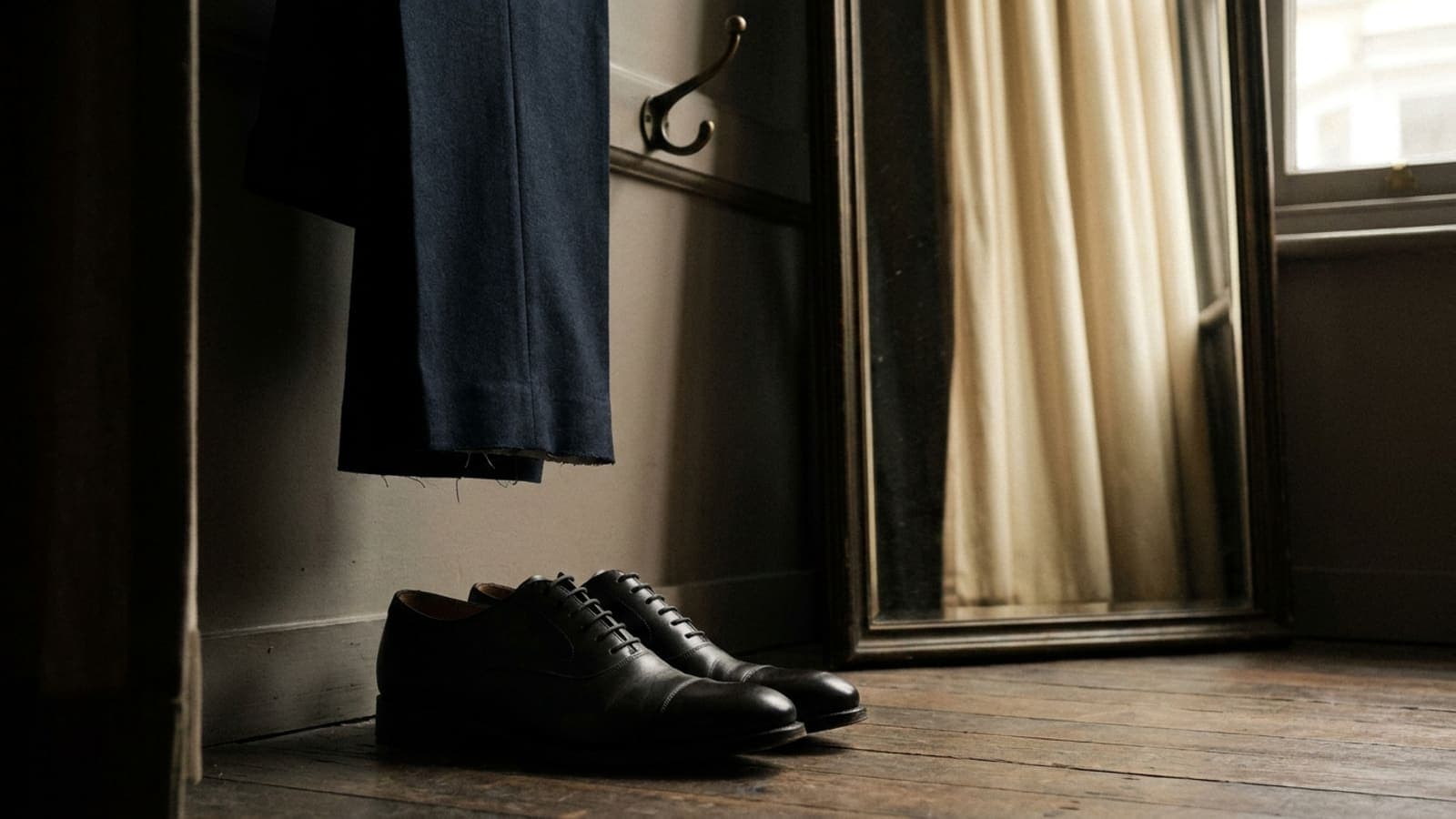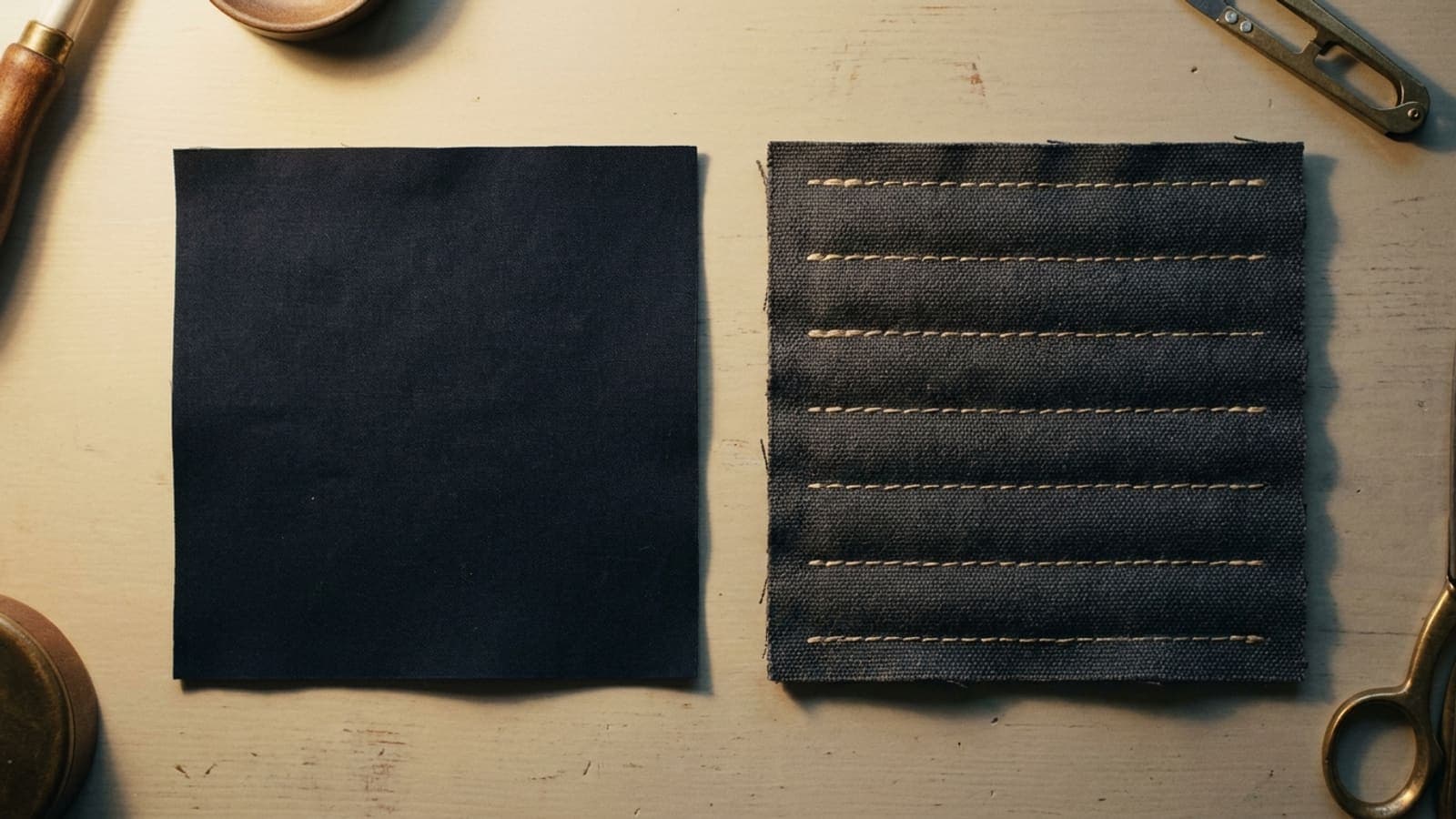
This is the question I am asked more than any other, usually while somebody is holding a jacket they are hoping I will save. The honest answer depends on four things, and you can check three of them yourself before you ever come in.
One — is there canvas in the chest?
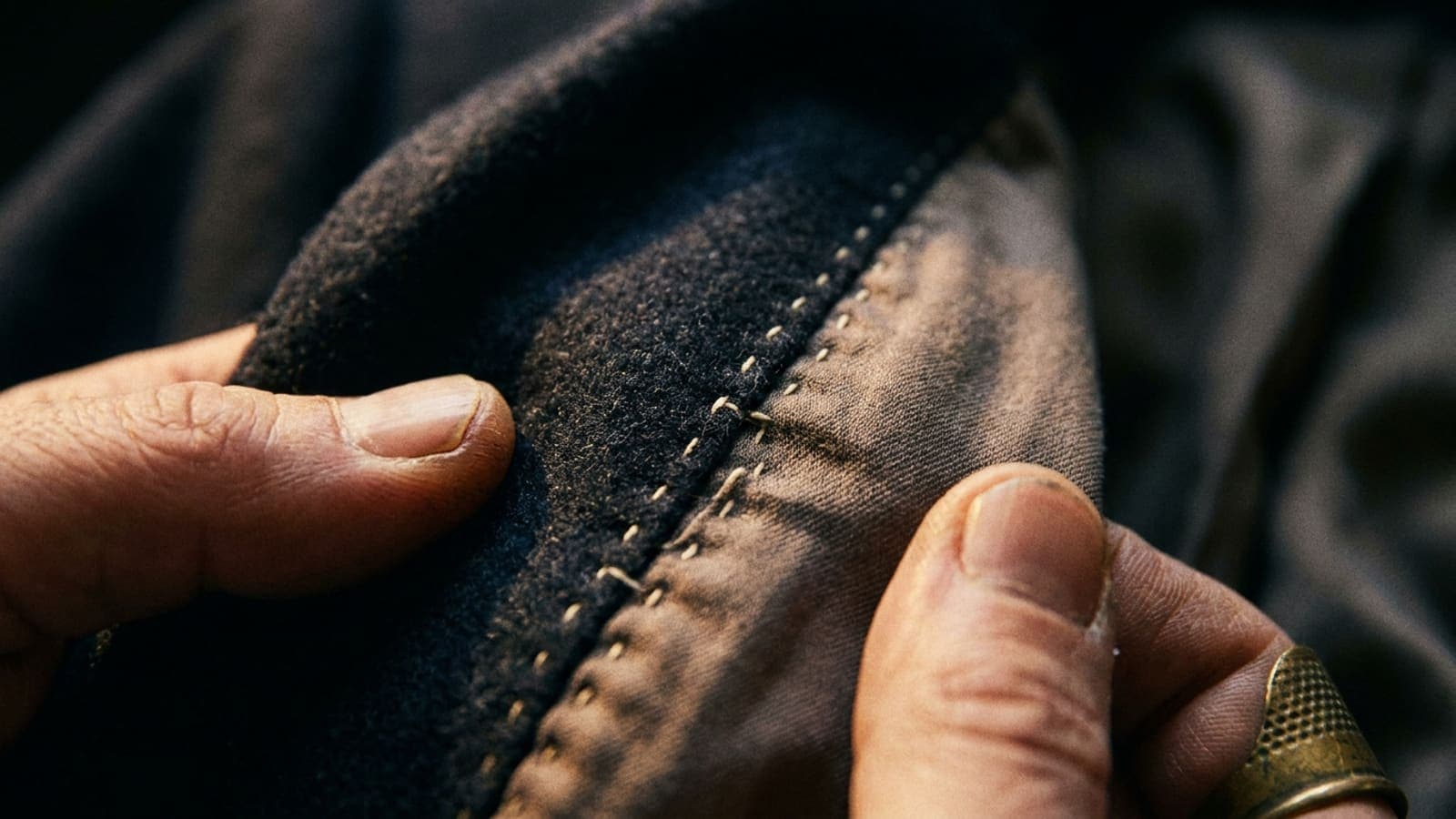
Take the front of the jacket between thumb and forefinger, just below and inward of the lapel buttonhole, and roll the two layers gently against each other. If you can feel a distinct third layer shifting between the outer cloth and the lining, there is a floating canvas in there. If the whole thing moves as one stiff board, it is fused — the cloth is glued to an interfacing.
This is the most consequential single fact about a jacket. A canvassed chest can be reshaped, and it moulds to the wearer over years. A fused one is fixed on the day it was made, and it can only get worse — after enough dry cleaning the bond fails and bubbles, which is that rippled look across the chest of an otherwise decent jacket. That is glue letting go and it is not repairable.
Two — how much inlay is in the seams?
Turn the trousers inside out at the waistband and look at the centre back seam. An inch or more each side means the waist can be let out later; a bare quarter-inch means it can only ever come in. Do the same on the jacket's side seams and centre back.
Generous inlay means the garment was built to be altered. A trimmed seam means it was built to be replaced, whatever the label says.
Three — is the problem above or below the shoulder?
Almost everything below the shoulder is negotiable. Waist, seat, leg, length, sleeve — all routine. The shoulder is the exception, and it is the one thing that decides whether a jacket ever looks right.
A shoulder can be corrected — the sleeve comes out and goes back in, and the padding and canvas underneath are reworked. But it is the most involved thing we do to a garment we did not make, and on a fused jacket it is often not worth attempting at all.
Four — the one you cannot check
Whether the cloth has gone. Shine at the seat and the elbows is fibre that has been abraded flat, and it does not come back. Thinning is thinning. A garment can be structurally sound and still be finished, and that is a judgement made by looking at it in daylight.
Putting it together
Roughly, and allowing for exceptions:
- Canvassed, generous inlay, fits at the shoulder — alter it, without hesitation. This is the garment people neglect while spending money elsewhere
- Canvassed, tight inlay, fits at the shoulder — alter it, but understand it is a one-way trip. It can come in and it will never go back out
- Fused but genuinely fits at the shoulder — worth basic work. Hem it, taper it, do not rebuild it
- Wrong at the shoulder, whatever else is true — this is where I usually say no. Not because it cannot be done, but because what you would spend gets you a long way toward something cut for you
Why I would rather tell you not to
Because the alternative is taking money for work that produces a garment you still do not reach for. That is worse for you and worse for us — the jacket goes back in the wardrobe, and the conclusion drawn is that tailoring did not help.
If you would like a second opinion on something you already own, bring it in. I will tell you honestly whether it is worth the work, including when the answer is no.
The sunk cost problem
The hardest cases are not the technical ones. They are the garments somebody paid a great deal for, that do not fit and never will, and that they cannot bring themselves to let go of because of what they cost.
The money is gone either way. Spending more on alterations does not recover it — it adds to it, and at the end you own an expensive garment that has now cost more and still is not right. I have had this conversation many times and it is never a comfortable one, but it is more useful than taking the work.
The opposite mistake, which is commoner
Neglecting something quietly excellent because it was inexpensive or came from an unfashionable source. I have opened up unremarkable jackets from decades ago and found work I could not improve on — full canvas, generous inlay, hand-set sleeves — because they were made when cloth was proportionally dearer and labour cheaper, and garments were built to be altered rather than replaced.
Those are the best value in most wardrobes, and their owners routinely do not know what they have. Which is the real argument for checking construction rather than reading labels: it tells you where to spend, and it is frequently not where you assumed.