The house was founded in 2015 and is now past its eleventh year. That is long enough to have fitted the same people repeatedly, which turns out to be the part that teaches you the most.
You see the same body change
A tailor who fits somebody once learns their measurements. A tailor who fits them across a decade learns something more useful: how a body actually moves over time, and how much of that a garment can be built to absorb.
An inch here and there across ten years is entirely ordinary. It is also precisely the amount that a garment with generous inlay can follow and one without it cannot. I understood that as a principle early. I understood it properly the first time a client came back after six years with a jacket I had made, and I could let it out because I had left something to let out.
That is why what leaves here is cut with room in the seams as a matter of course, and why we maintain what we make for as long as it is worn.
Everything in one building
745 W. Johnson Street holds the whole operation — shopfloor, fitting rooms, pattern table, and the workroom behind it. Nothing is sent out.
That matters more than it sounds. When a jacket needs a quarter-inch off the left shoulder because the client carries it lower than the right, the person deciding that and the person doing it are in the same room, and frequently the same person. Nothing is lost in a handover, because there is no handover.
It is also slower to scale than the alternative, which is a choice we keep making.
What eleven years changed
- The clientele. What began as alterations became, over time, largely bespoke and wardrobe work — which is why the shop no longer takes simple mending
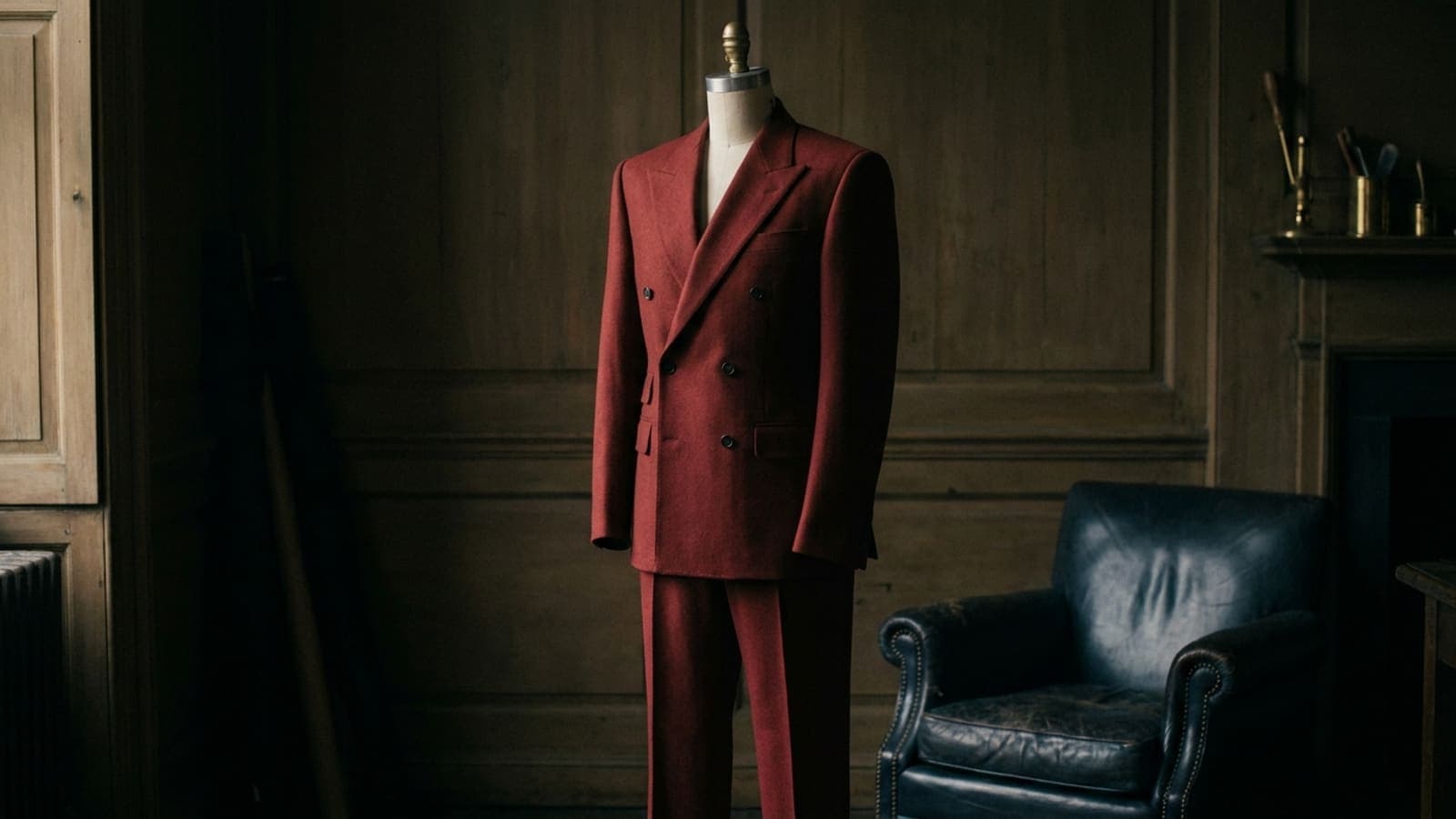
- The women's side, which was a small part of the business and is now a real one, and the part people are most surprised by
- How we communicate. Growth made informality unworkable: order enquiries now go by email, because a text answered from a fitting room is a text that gets lost
- What we say no to, which is a longer list than it was and is the main reason the rest works
And what did not
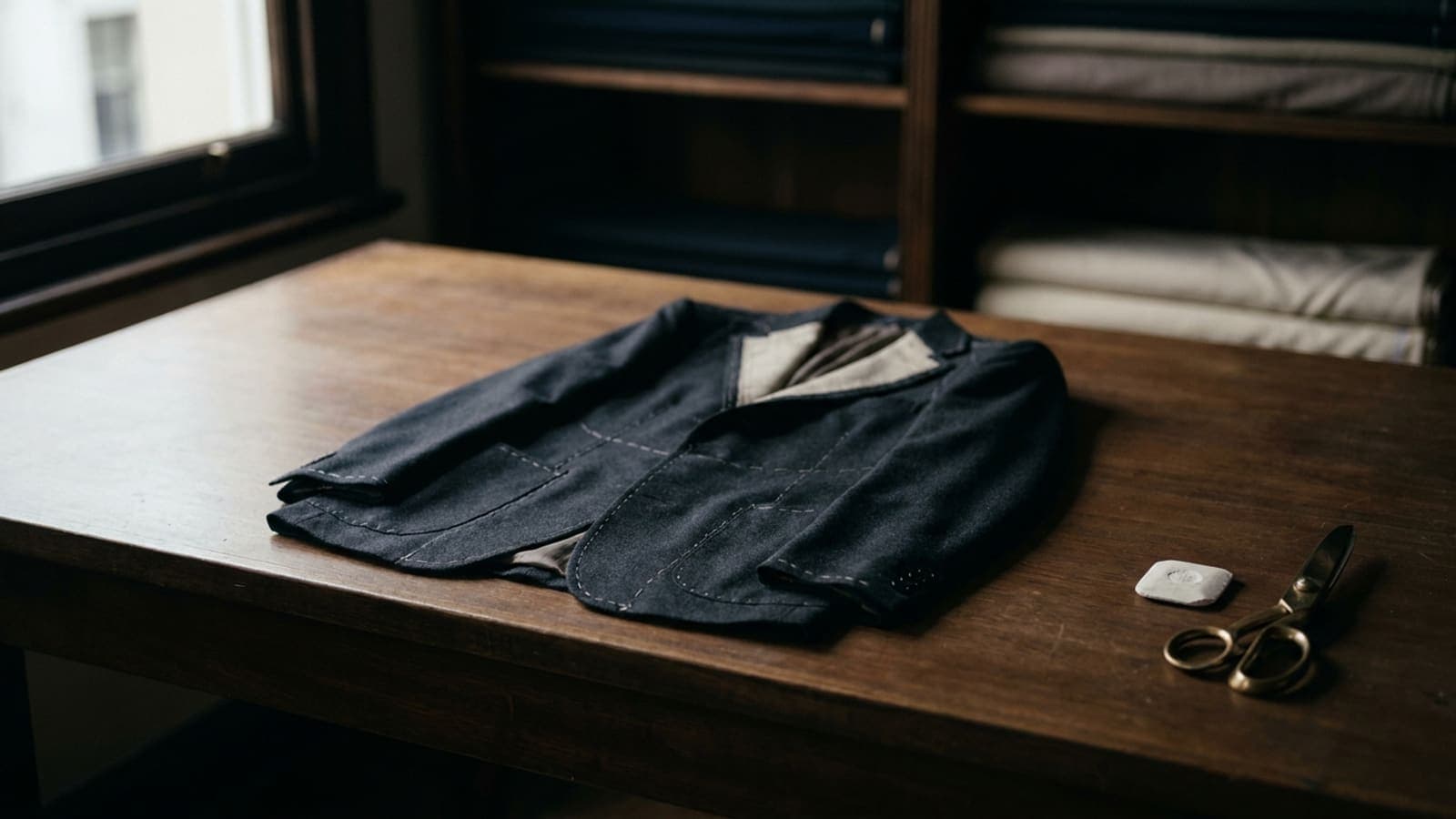
The three fittings. A scrap fitting to prove the pattern before any cloth is cut, a basted fitting while everything can still be moved, and a forward fitting before delivery. There has been commercial pressure at various points to compress that to two, and it has never once looked like a good trade.
The reason is simple arithmetic about attempts. Three fittings is the number of chances it takes to get a shoulder right on a real body — one that is asymmetrical, that stands differently at the end of the day than at the beginning, and that is nothing like the mannequin ready-to-wear was drafted against.
Take one away and you have not saved a week. You have bought a garment that had one fewer opportunity to be correct.
The measure that matters
Over ten thousand hours of fitting and wardrobe design, and over a decade dressing North Carolina's leaders. But the number that means the most is none of those. It is the clients who came in for a hem in 2016 and are now on their fourth commission — which is the only real evidence that any of this works.
The mistakes worth admitting
Saying yes too often, for years. It felt like service and it was mostly cowardice — the discomfort of declining work is immediate and the cost of accepting it is deferred, so the incentive runs one way. The result was a workroom doing a great many things adequately.
And being the bottleneck personally. For a long time the fastest way to get anything done here was to text me directly, which worked beautifully until it stopped scaling. It is the reason order enquiries now go by email, and the reason the team has been instructed not to route things through me out of hours. That change was overdue by about two years.
What a decade in one room actually teaches
That most of what looks like taste is pattern recognition. When somebody puts on a jacket and something is wrong, the useful skill is not an opinion about it — it is having seen the same thing four hundred times and knowing whether it is the balance, the shoulder, or the way they happen to be standing this afternoon.
That is not a mystical thing. It is repetition, which is the whole argument for going to somebody who does this all day rather than somebody who does it sometimes. The hours are not a credential; they are just where the pattern recognition comes from.