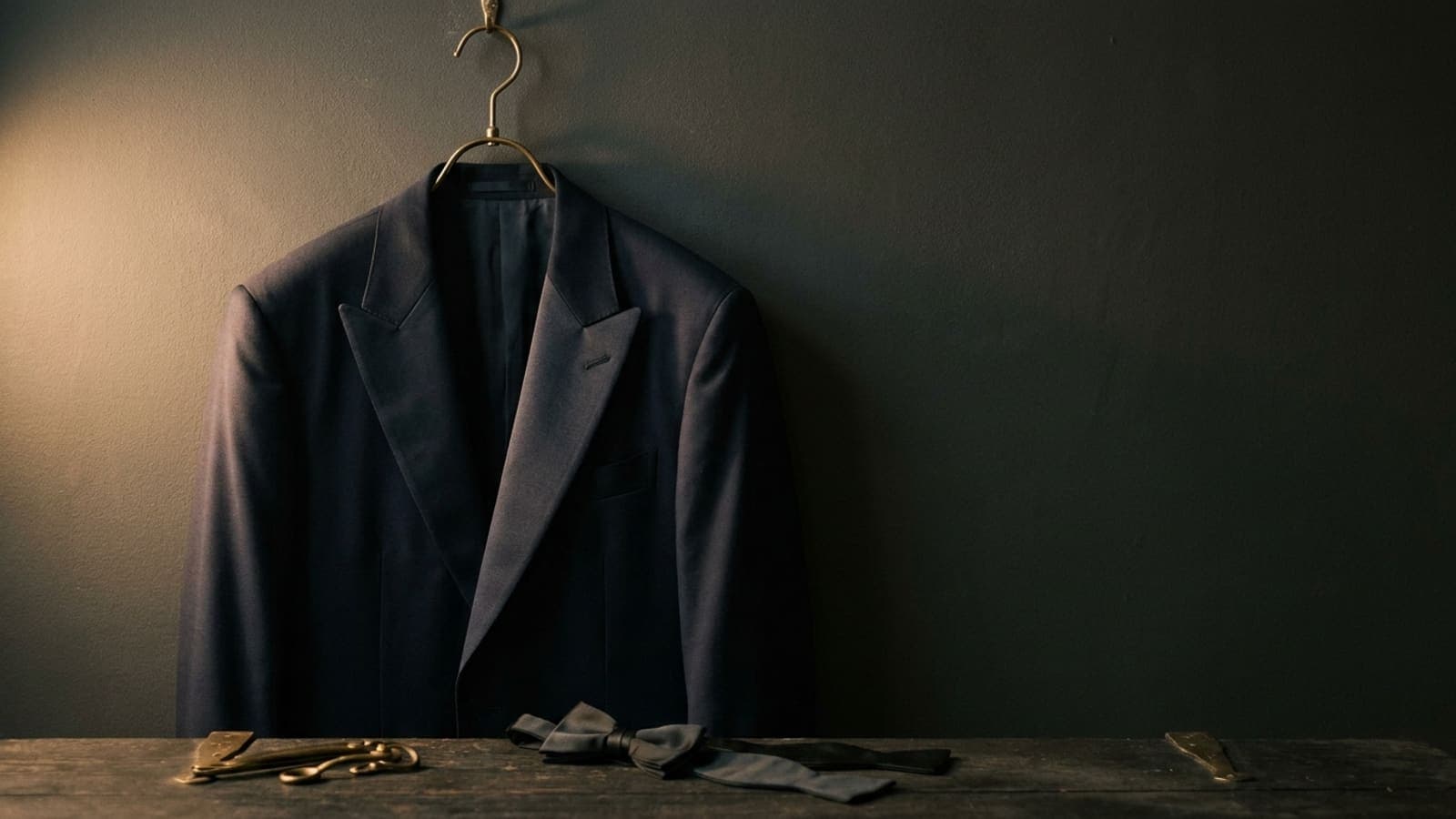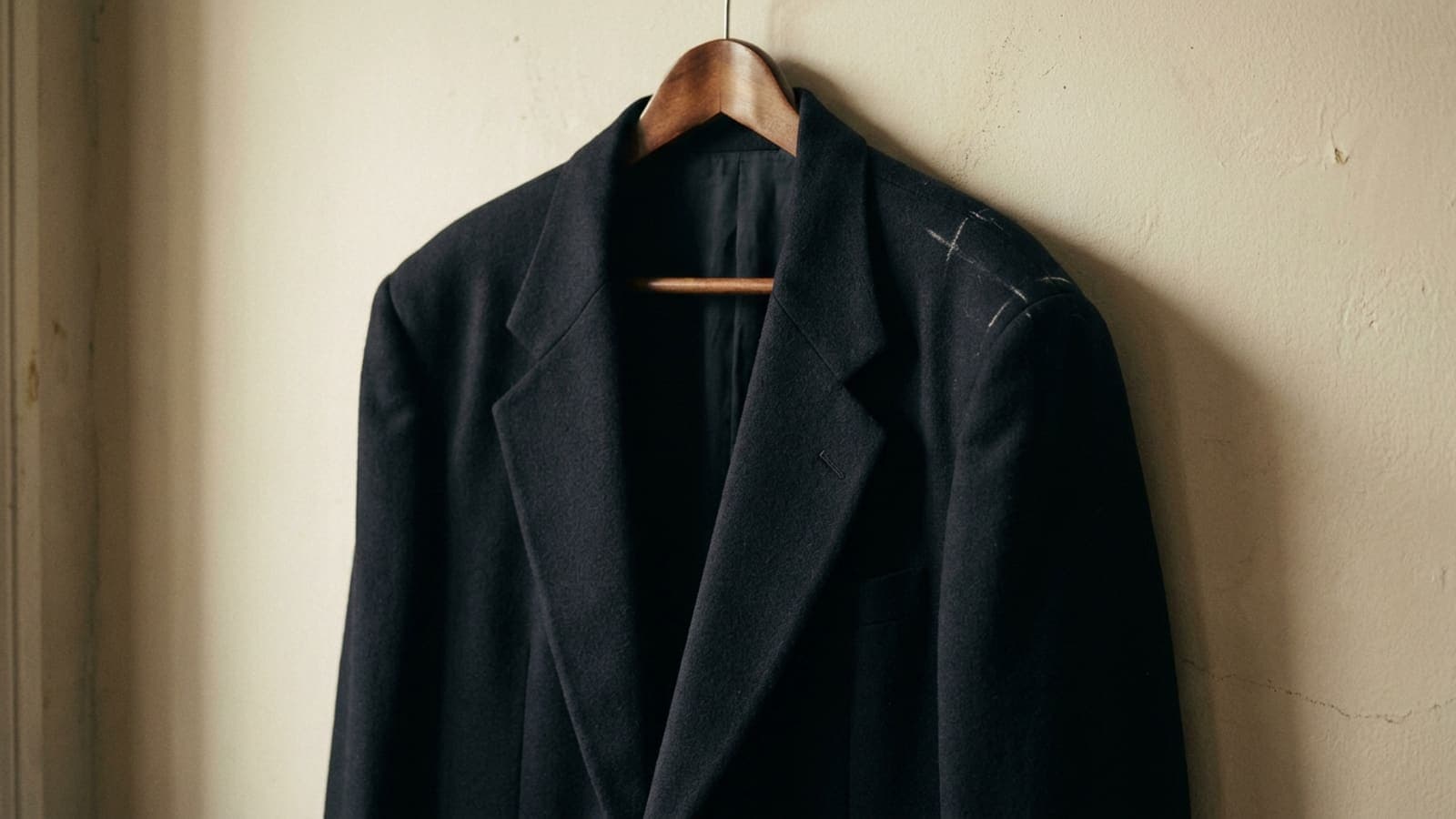
A good proportion of what comes through the workroom was not made here and was not made recently. Fine suits and gowns are frequently heirlooms — passed down, or bought at a point in someone's life that mattered, and kept long after they stopped fitting or stopped looking current.
Restoration is the work of bringing those back. It is not the same as alteration, and it is not the same as repair.
What is actually being restored
Usually three things at once, and they pull in different directions. The fit, because the person has changed. The condition, because thirty years of wear and dry cleaning leave marks. And the silhouette, because a jacket cut in 1994 announces 1994 from across a room, mostly through the shoulder and the lapel.
That third one is the interesting part and the delicate one. The aim is not to make an old suit look new — it is to bring it into a more contemporary, tastefully tailored line without erasing what it was. Overdo it and you have a garment with no character that also no longer fits its own cloth.
The houses we see most
Brioni, Canali, Tom Ford, Kiton, Isaia, Zegna, Armani and Hugo Boss, along with a good many jackets whose labels mean nothing to anyone outside the family that owns them. The label is not what determines whether the work is worth doing.
What determines it is what is inside:
- Is there a floating canvas, or is the chest fused? Roll the front between thumb and forefinger below the buttonhole — a distinct third layer shifting between cloth and lining means canvas, and canvas means there is structure to rework
- Is there inlay in the seams? Generous seam allowance means the garment can be made bigger; a bare quarter-inch means it can only be made smaller, once
- Has the cloth gone? Shine at the seat and elbows is thinning, and thinning cannot be reversed. Moth damage in an inconspicuous place can be rewoven; across a lapel it cannot
- Is the lining failing on its own, or has the fusing bubbled? Bubbling across the chest is glue letting go, and that is terminal
What restoration can genuinely do
A great deal. Shoulders can be reshaped and the padding reduced, which is the single biggest thing that dates a jacket from the eighties and nineties. Lapels can sometimes be narrowed, depending on where the buttonhole sits. A jacket can be shortened, though less than people hope, because the pockets set a floor. Trousers can be tapered, the rise adjusted within limits, and pleats removed or kept depending on what you want the leg to do.
Linings can be replaced entirely, which transforms how a garment feels to put on and costs less than people assume. Buttons can be changed, and it is astonishing how much a horn button does for a jacket that came with plastic.
And what it cannot
It cannot add cloth that is not there. It cannot make a fused jacket behave like a canvassed one. It cannot rescue a garment that was two sizes wrong when it was bought — restoration works on the assumption that the garment once fitted somebody, and the further you are from that person's shape the less there is to recover.
And it cannot make a sentimental garment into a practical one. Sometimes a suit should be kept as what it is rather than turned into something wearable, and I will say so. That is a real answer, not a refusal.
If you have one
Bring it in. Twenty minutes in the diary and I will tell you honestly what is in it and what could be done — including when the answer is that it is not worth the work. New high-end designer suiting takes fifteen percent off the tailoring, which is worth knowing if the piece you want brought into line is one you have only just bought.
The most common restoration by far
A jacket from the nineties or early two-thousands, in genuinely good cloth, that its owner has stopped wearing without quite deciding to. The complaint is usually vague — it feels dated, it does not feel like them any more — and the cause is almost always the same two things.
First, the shoulder. Padding was heavier and extended further, and the resulting line reads immediately as a particular decade. Reducing it is the single highest-return alteration available on a garment of that age, and on a canvassed jacket it is entirely achievable.
Second, the length. Jackets were cut longer, and length is the proportion the eye reads fastest. There is less room to move here than with the shoulder, because the pockets set a floor — you can only shorten a jacket until the balance between pocket and hem stops working. But an inch is often available and an inch is frequently enough.
What it is worth doing to
The honest test is whether you would wear the result. A restored jacket is still the jacket it was: same cloth, same weight, same fundamental cut. If the reason it sits unworn is the cloth, or the pattern, or an association with a particular period of your life, restoration will not change that and I would rather say so than take the work.
Where it genuinely earns its money is a garment somebody already loves that has stopped fitting them, or an heirloom that ought to be worn rather than stored. Those are the ones worth the workroom's time, and the ones people are most pleased with afterwards.