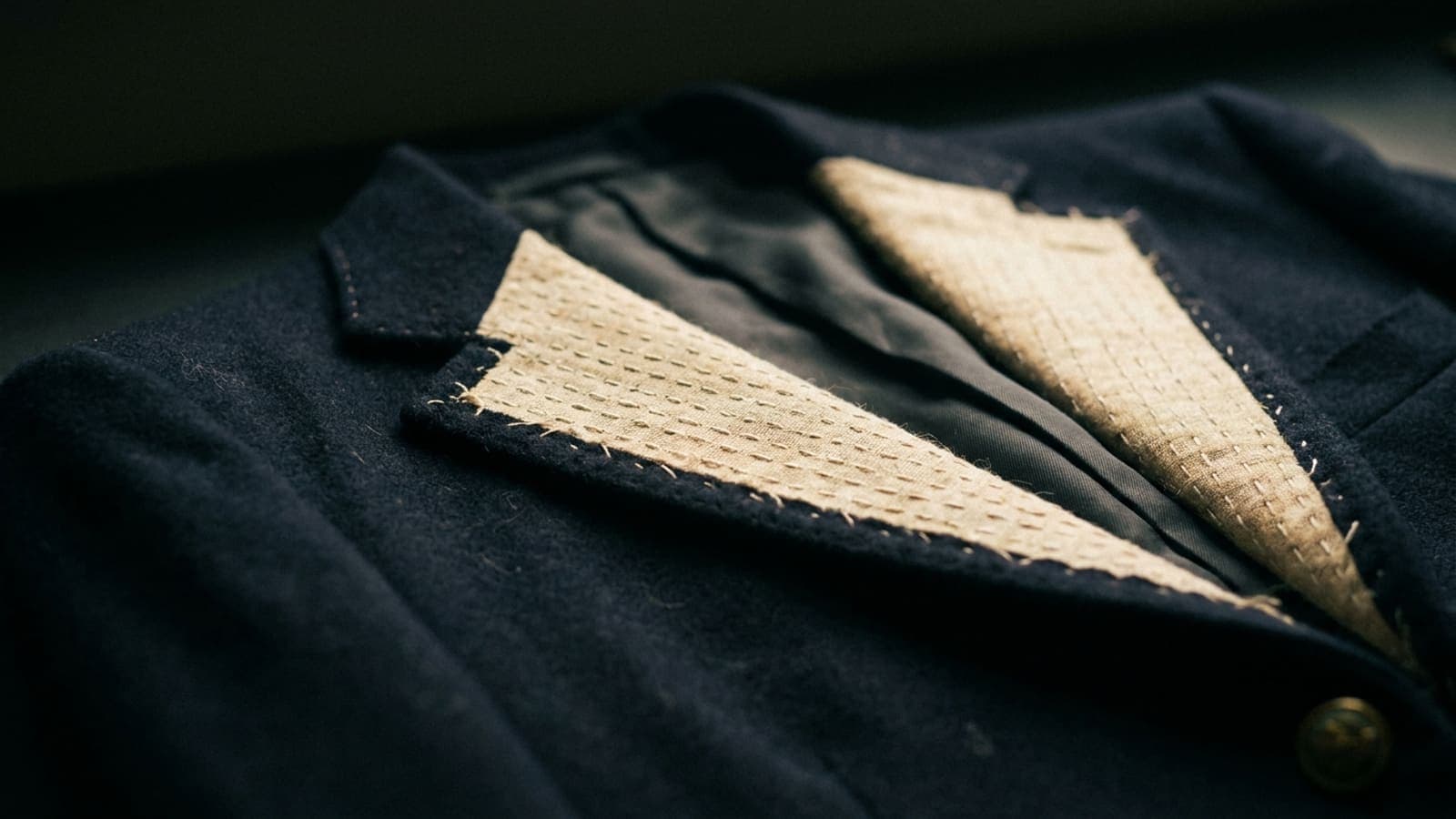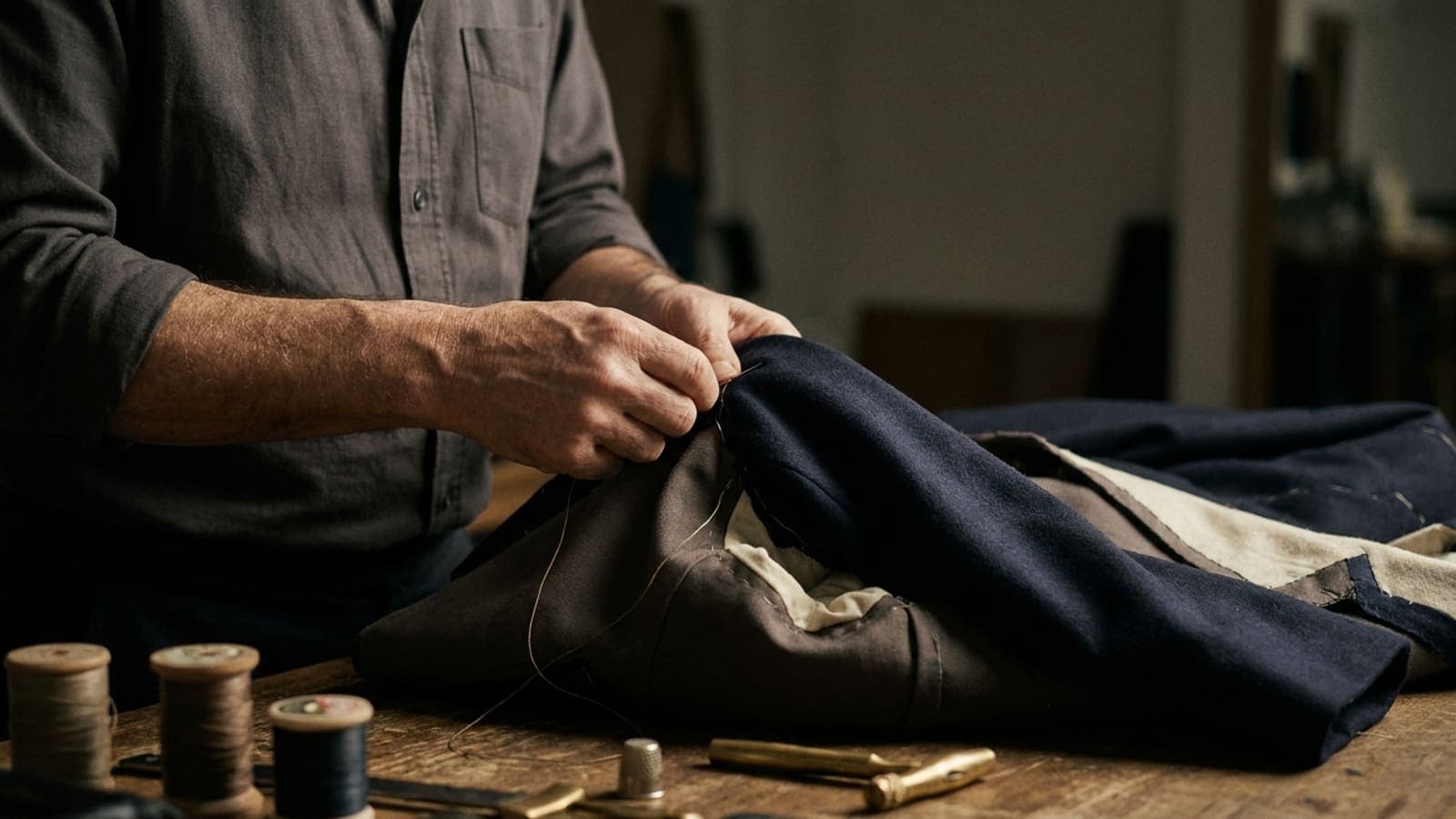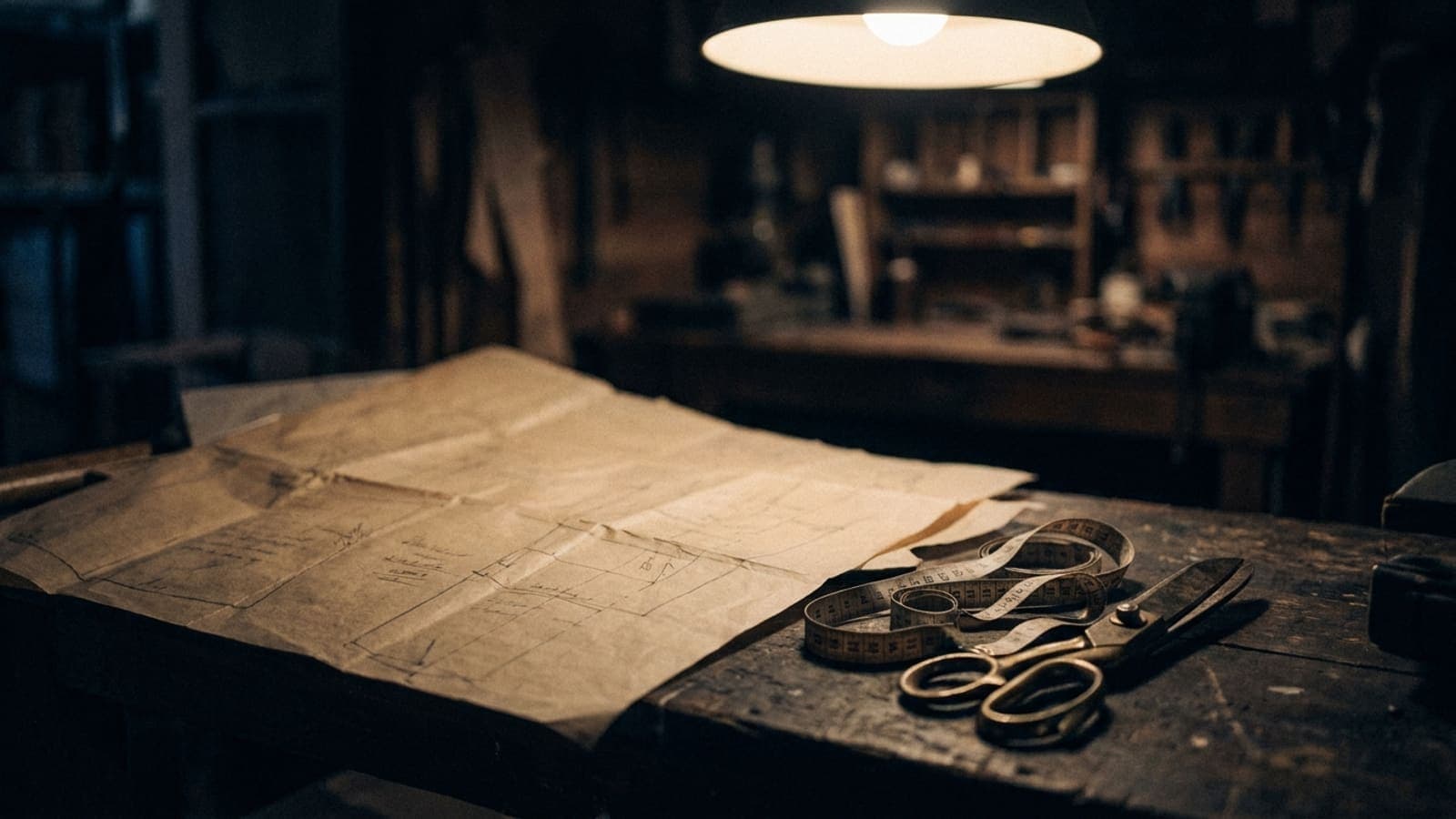
The measuring is the shortest part of a first appointment. It takes a few minutes and it is the part everybody expects, which is why people are sometimes surprised that the other forty are spent talking and looking.
The reason is straightforward: two men can produce an identical set of numbers and need meaningfully different patterns. Nothing in the tape will tell you which is which.
What the numbers miss
A tape measures circumference and length. It does not measure how you stand — and posture is the single largest determinant of how a jacket hangs on you.
The things I am actually looking at while apparently making conversation:
- Stance — whether you stand upright, forward, or with a slight sway back. This determines the balance of the jacket, the relationship between front length and back length, and getting it wrong produces a garment that rides up or gapes at the collar no matter what else is done to it
- Shoulder slope, and how much the two sides differ. Everyone is asymmetrical; the question is by how much and in which direction
- Whether the head sits forward of the spine, which is increasingly common and changes where the collar has to sit
- Whether the back is straight or rounded, which changes how much length the upper back needs
- Where weight is carried. Two men at the same chest measurement, one carrying it in the chest and one at the waist, need different amounts of shape cut into the side seams
- Whether you carry a bag, and on which shoulder, because a strap on the same side daily compounds an asymmetry that is already there
Why people cannot self-report this
I do not ask clients how they stand, because nobody knows. Posture is invisible from the inside — you have been standing that way your whole life and it feels like standing. It also changes: most people stand differently at nine in the morning than at five in the afternoon, and differently again when they think they are being assessed.
That last one is a real complication. Ask someone to stand naturally and they will square their shoulders. So a good part of the first appointment is conversation whose actual purpose is to get you to stop performing and stand the way you will stand at the wedding, in the meeting, at the bar afterwards.
The jacket you never wear
The most useful question I ask has nothing to do with measurement. It is: what do you own that you never wear?
Everybody has one. And the reason they give is almost never the reason. They will say they went off the colour, or it does not suit them any more, or it is a bit dated. Then they bring it in and it pulls across the shoulder blades, or the collar stands away when they turn their head, or the armhole is so low that lifting a glass moves the whole jacket.
They have simply never had the vocabulary to say so. What they experienced was a vague sense of not feeling right in it, and the mind supplies a reason afterwards. Finding out which garment that is, and putting it on, tells me more in two minutes than the tape does in ten.
Where this ends up
All of it goes to the pattern table, where a pattern is drafted for one body and no other. That is the literal meaning of bespoke — the word originated on Savile Row and means to be spoken for, a garment claimed by a person before it exists.
Made-to-measure starts from an existing block and adjusts it within the limits of what that block can do, and for many people that is genuinely enough. Where it stops being enough is exactly where the reading comes in: a genuinely uneven shoulder, a forward-set neck, a chest that is not the shape the industry has agreed chests are. Those are not adjustments. They are a different pattern.
The pattern is also kept. It is a record of a specific person at a specific point in their life, and everything made afterwards starts from it rather than from scratch — which is why a second commission is a different experience from a first.
The things people apologise for
A surprising amount of a first appointment is spent telling people that something they are apologising for is not a problem. Rounded shoulders, a stomach, one hip higher than the other, a neck that sits forward from a career at a desk — these arrive pre-apologised for, as though tailoring were a judgement.
It is the opposite. Those are precisely the things a drafted pattern exists to accommodate, and they are the reason bespoke is worth the money for the people who have them. Somebody who is close to a standard shape gets less out of a commission than somebody who is not, because ready-to-wear was already broadly working for them. The further you sit from the average, the larger the difference a pattern makes.
What we write down
Measurements, obviously. But alongside them a set of notes that would look cryptic to anybody else: which shoulder is lower and by how much, whether the stance is upright or forward, how the back sits, where weight is carried, whether a bag is worn and on which side. Those notes are what turn a set of numbers into a pattern.
They are also kept, along with the pattern itself. When somebody comes back three years later the starting point is not a blank sheet and a tape — it is a record of a specific person, which is why a second commission is both faster and better than a first.